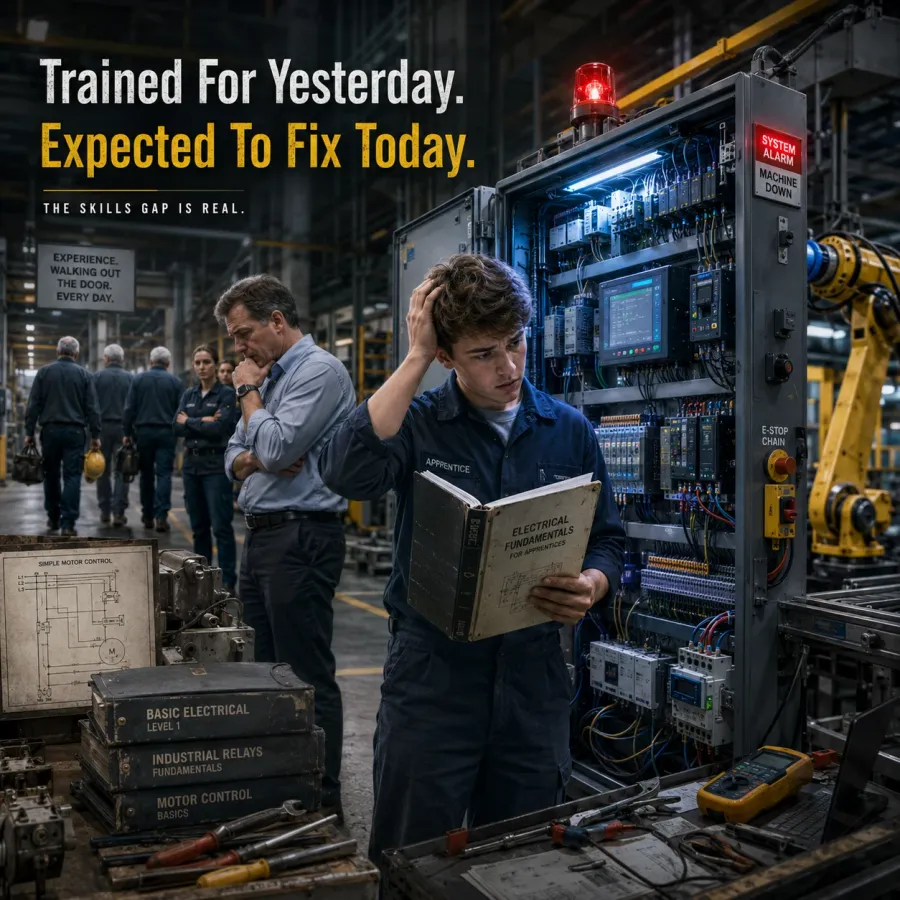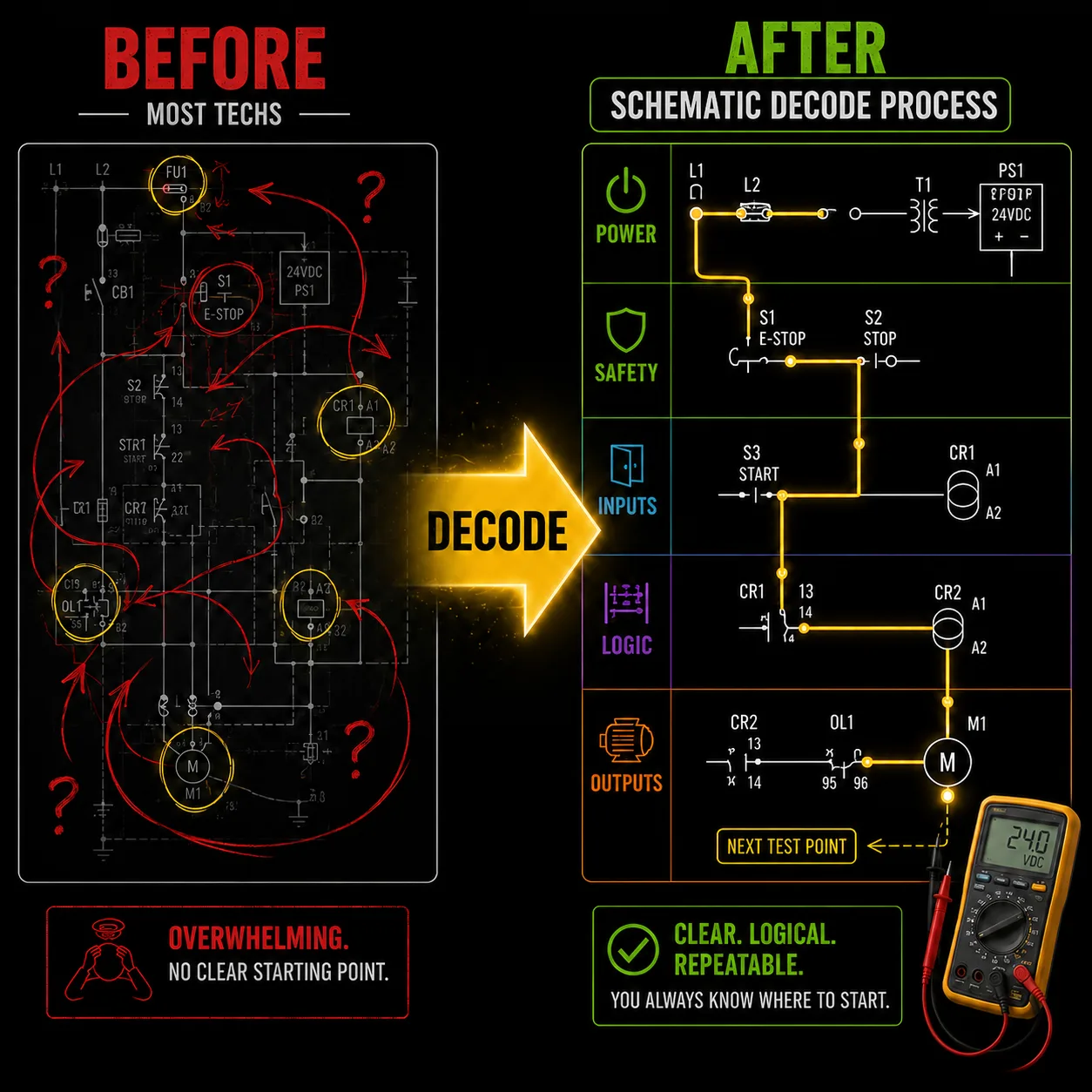
Stare at a drawing for 20 minutes
Guess where to start
Hope the problem jumps out at you
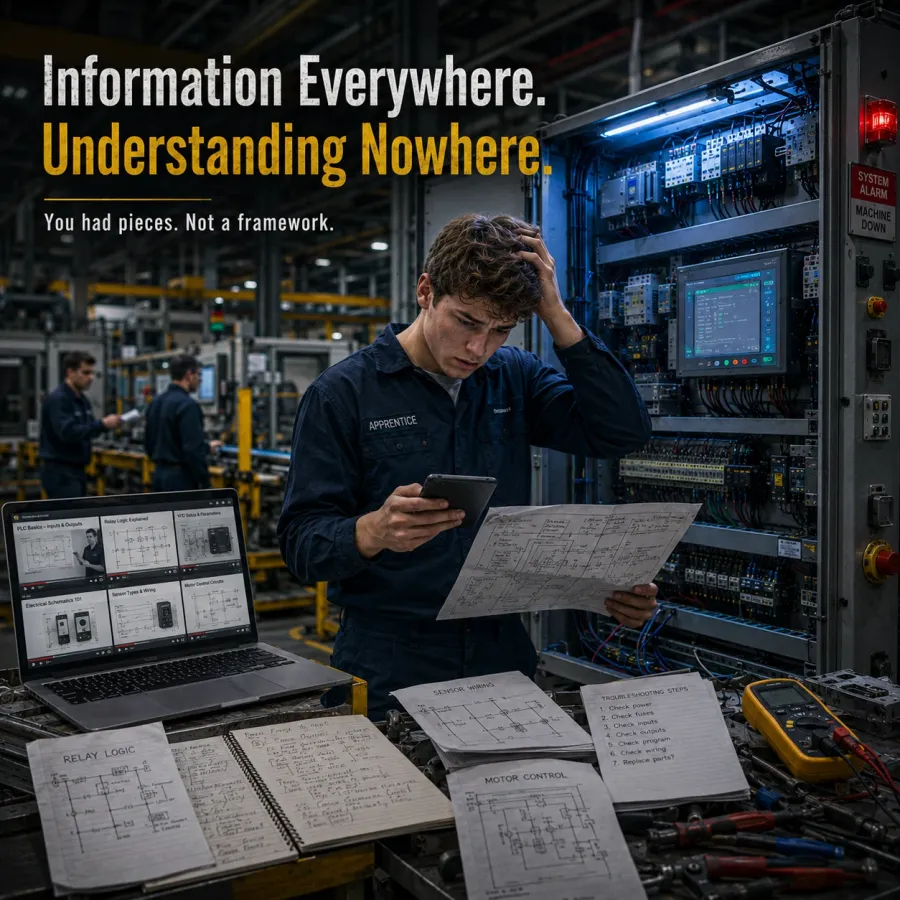
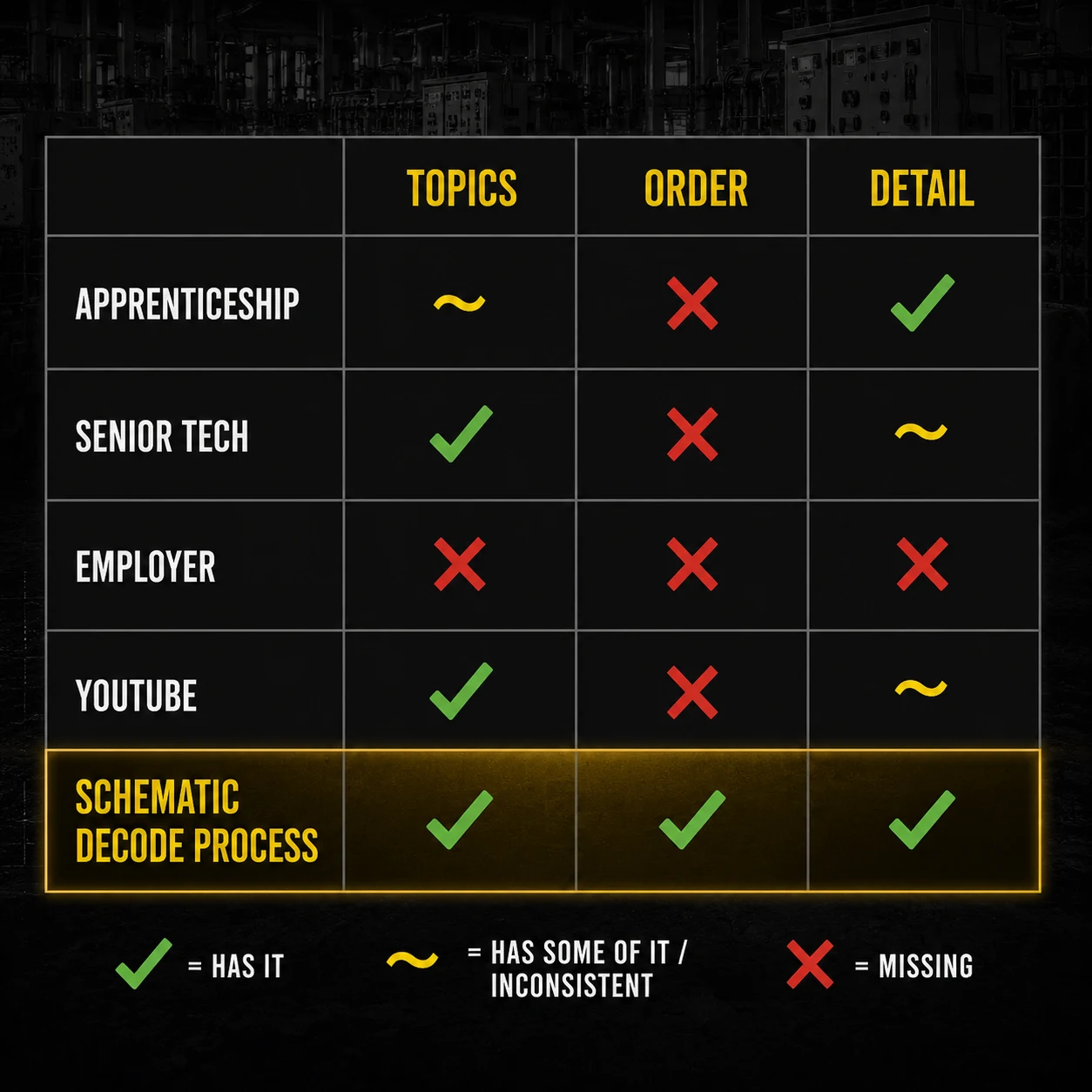
You were given symbols.
You were given standards
You were never given a process.
Know exactly where to start every time a machine goes down — because the schematic tells you before you touch a single wire
Walk up to a schematic and actually know what you’re looking at
Stop freezing when someone says, “Did you check the drawing?”
Find problems faster without replacing parts just to try something
Feel confident opening panels instead of hoping someone else jumps in
Finally understand schematics the way senior techs do — calmly and methodically


Know exactly where to start every time a machine goes down — because the schematic tells you before you touch a single wire
Walk up to a schematic and actually know what you’re looking at
Stop freezing when someone says, “Did you check the drawing?”
Find problems faster without replacing parts just to try something
Feel confident opening panels instead of hoping someone else jumps in
Finally understand schematics the way senior techs do — calmly and methodically
Get frustrated staring at schematics and thinking, “Where do I even start?”
Know what a relay, sensor, or contactor does — but struggle to see the full picture
Feel pressure during breakdowns and hate guessing in front of others
Want to troubleshoot faster without swapping parts or asking for help
Are tired of feeling behind and want real confidence — not more theory
Techs who already read schematics confidently and just want advanced controls training
Anyone looking for a shortcut that skips the fundamentals
Engineers — this was built specifically for the floor, not the office


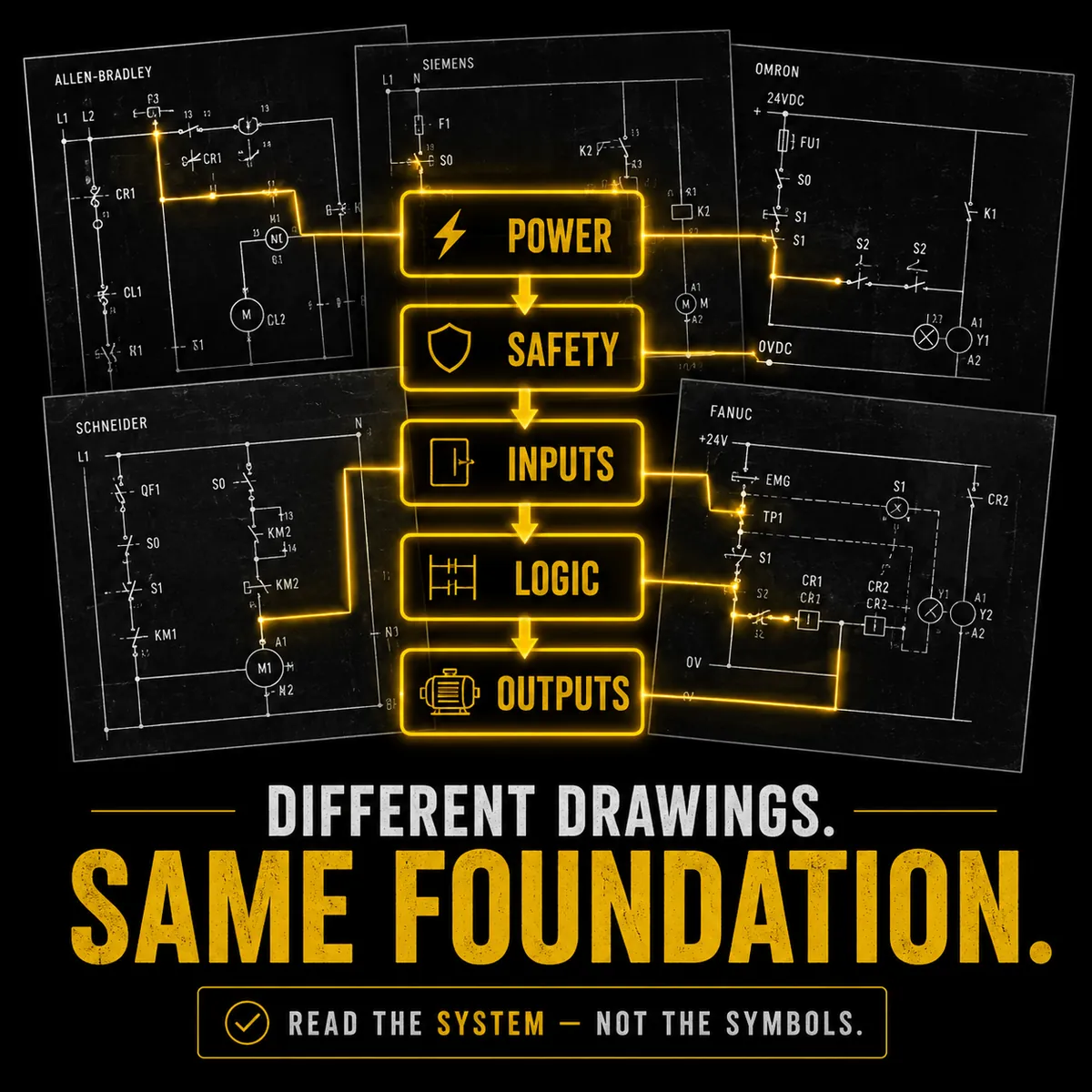
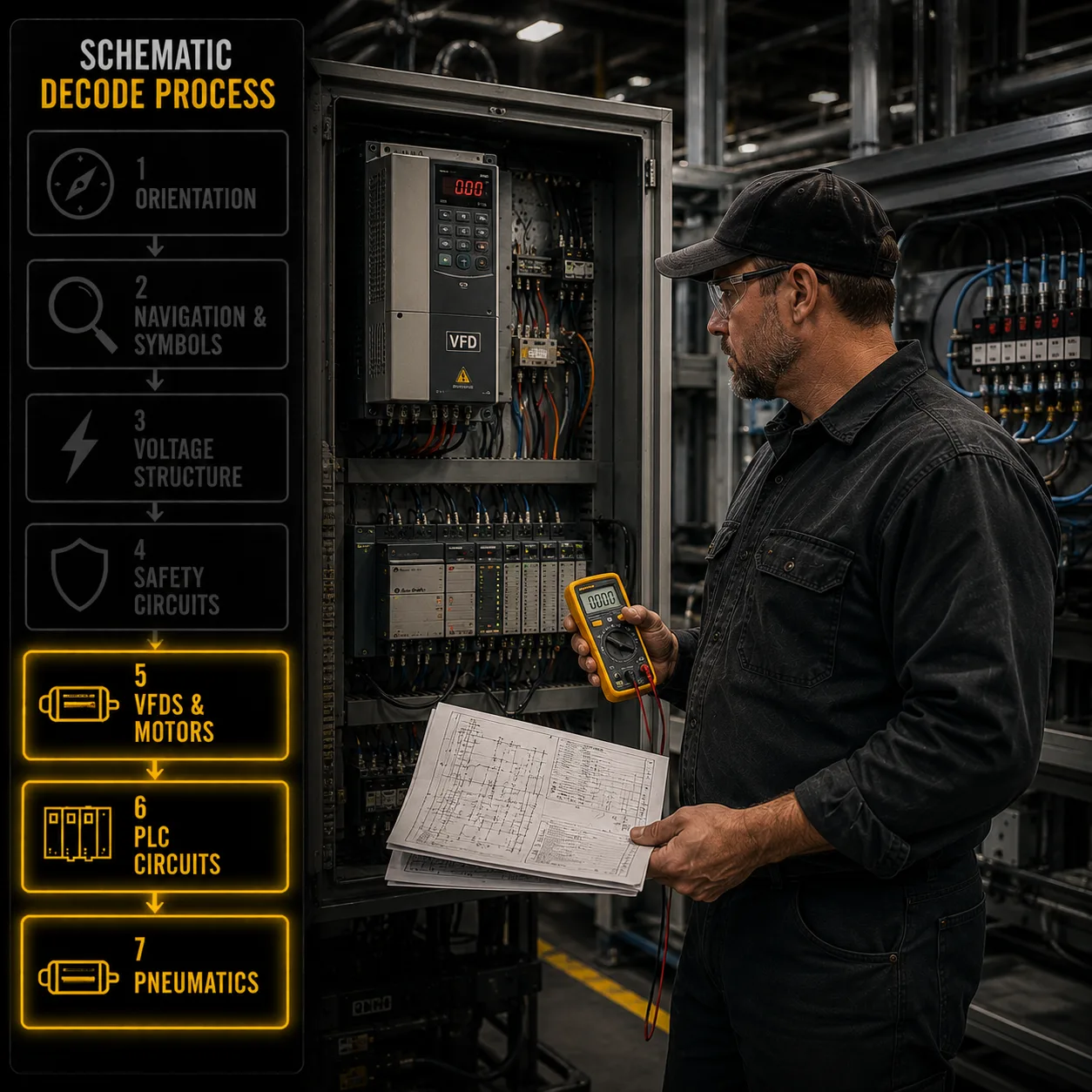
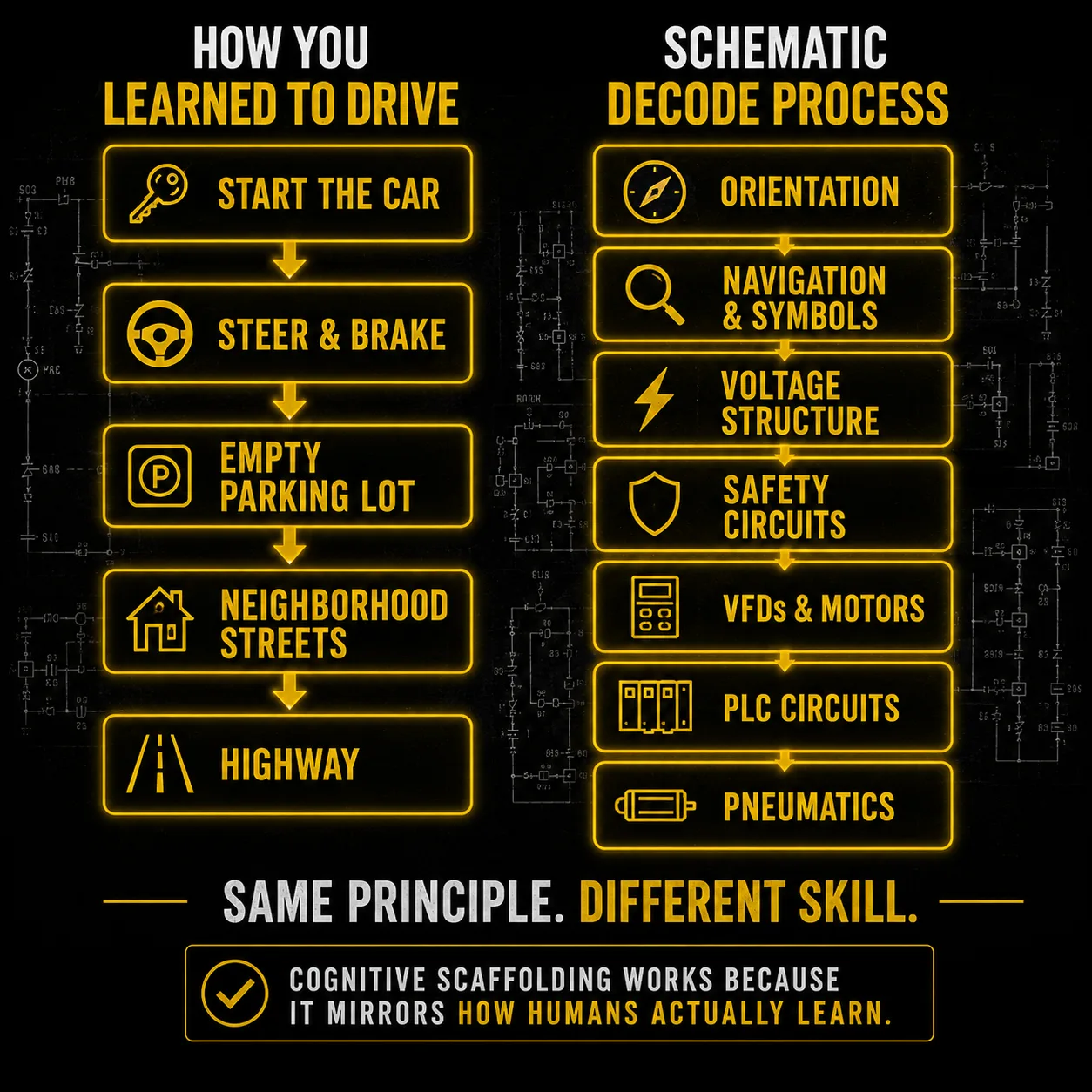
The step-by-step method for entering any schematic and knowing exactly where to start — even on drawings you've never seen before. Most techs scan randomly and hope something jumps out. This gives you a repeatable process that works on every machine you'll ever work on.


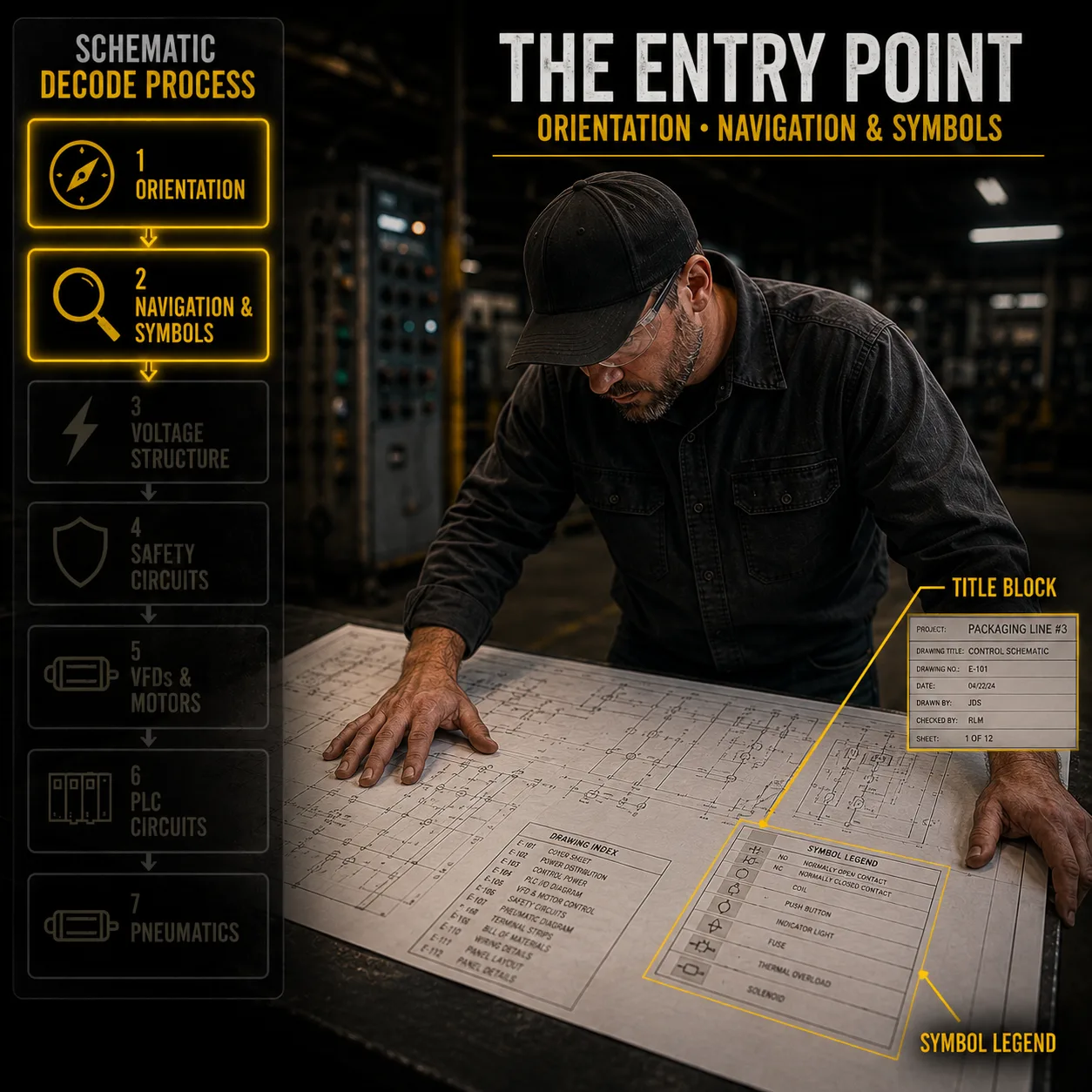
How schematics are organized and how to follow them with purpose. References, flow, and layout — so you're moving through the drawing with intent instead of getting lost halfway through and giving up.


Symbols taught in context, not as a memorization list. You'll learn what each component is doing in the circuit so you can recognize its role instantly while you're troubleshooting — not after you've already swapped three parts.


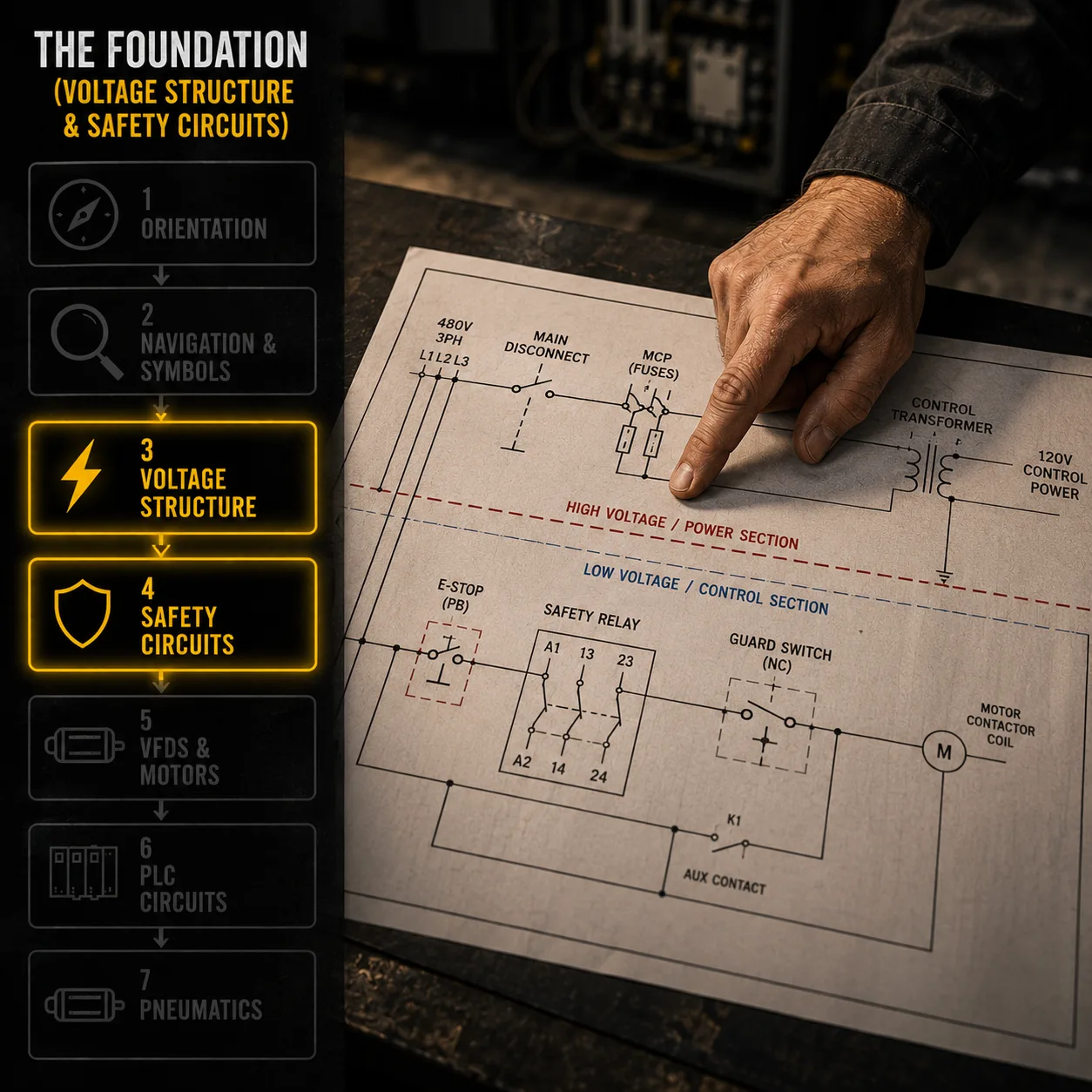
How to identify which voltage circuit you're in and exactly what your meter should be reading before you touch a single test point. No more guessing at measurements or chasing readings you don't understand.


Safety circuits are the most commonly misdiagnosed fault on any machine. This shows you how they're structured, how devices link together, and how to trace exactly where the fault is stopping operation — without bypassing or guessing.


Different drives, different brands, different layouts — but the same underlying pattern. Once you see it you'll stop treating every new VFD setup like a brand new problem and start recognizing what you're looking at immediately.


Most techs jump straight to ladder logic when a machine faults. This shows you how to use the schematic to determine whether the PLC is actually the problem before you waste an hour in the program — and how to follow signals from device to PLC and back.


Electrical and pneumatic systems talk to each other. Missing that connection means missing faults that cross both systems. This ties pneumatic diagrams into electrical control logic so you're reading the full machine, not isolated parts.


You'll know exactly where to start — every single time you open a schematic, on any machine, at any facility
You'll stop freezing when someone says "did you check the drawing?" — because you'll actually want to check it
You'll find faults faster without swapping parts — because you're tracing the circuit instead of guessing at components
You'll read VFD, safety, PLC, and pneumatic circuits — without every new machine feeling like starting from scratch
You'll understand what your meter should be reading before you even touch it — because the schematic already told you
You'll be the tech who goes straight to the schematic — instead of the one waiting for someone else to figure it out
Lifetime access — rewatch any module on the floor the moment you need it


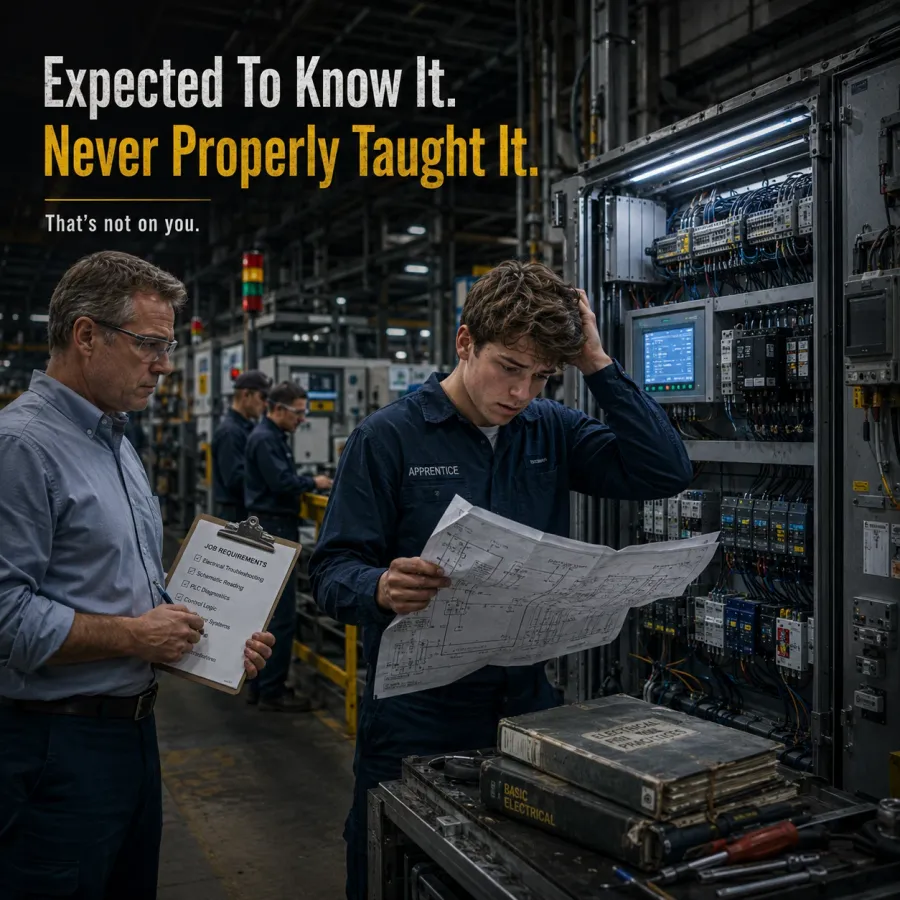
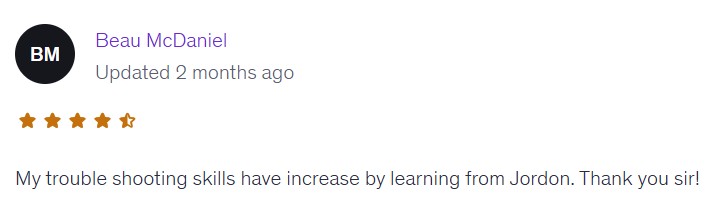
I get it — you were told to "just read the prints" but nobody ever actually showed you how. That's not a skill problem. It's a training problem. And it's left too many good techs avoiding schematics entirely, guessing at faults, and calling for help they shouldn't need.
I've spent years building practical training for maintenance and automation technicians. What started as corporate classroom training — at $1,249 per seat — has been through over 400 technicians at companies including Walmart, Amazon, Toyota, Smithfield, and Nestlé.
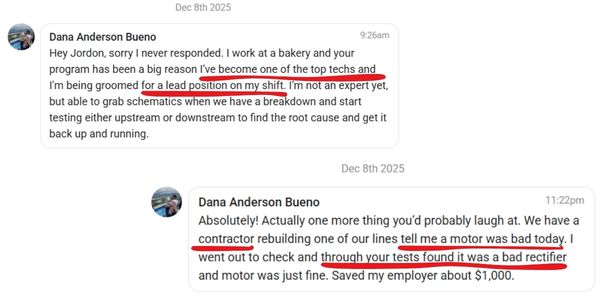
The techs who went through it stopped freezing at the panel. They started going straight to the print. And the people around them noticed.
I built the schematics training I wish someone had handed me on day one. Not theory. Not symbols to memorize. A decode process that works on every drawing you'll ever see — on any machine, at any facility.
This is the training your company should've given you — but didn't.

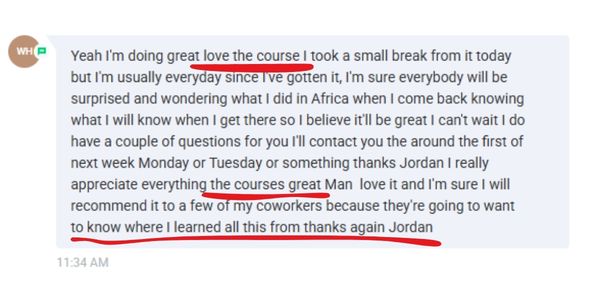
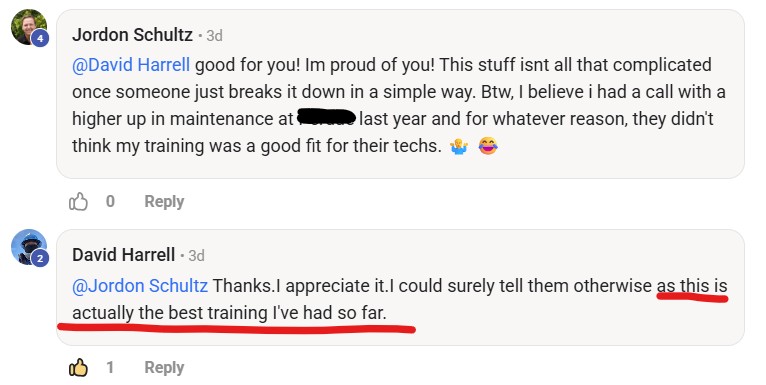
"The new guys who're crushing it... that's how they were trained, go talk to Jordon"
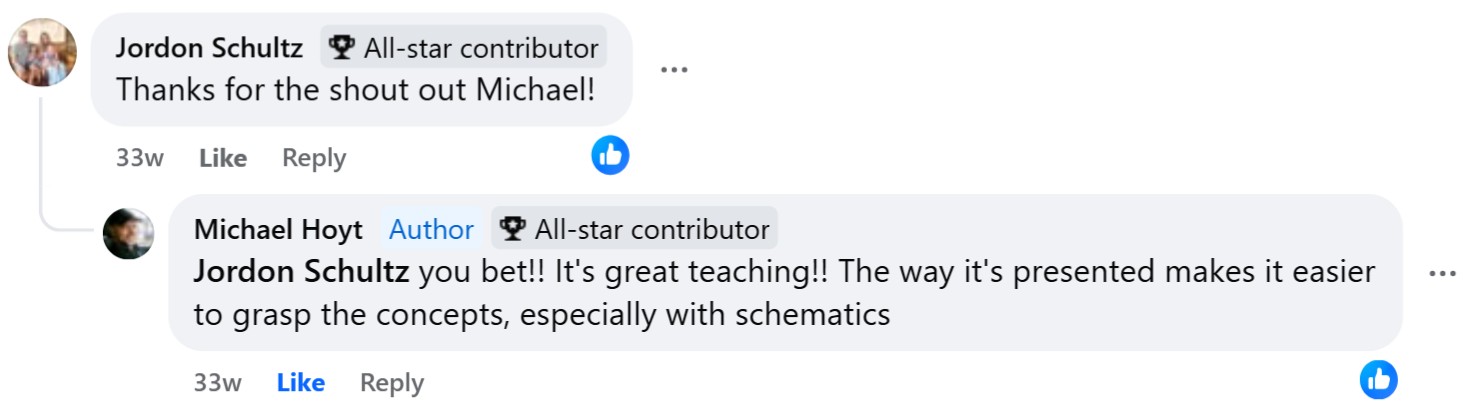
"You explained it and now I feel stupid for not understanding it the first time." - Michael Gonzalez

"The confidence would be invaluable."
"I wish I had this training when I first got into maintenance." - Patrick Stansell

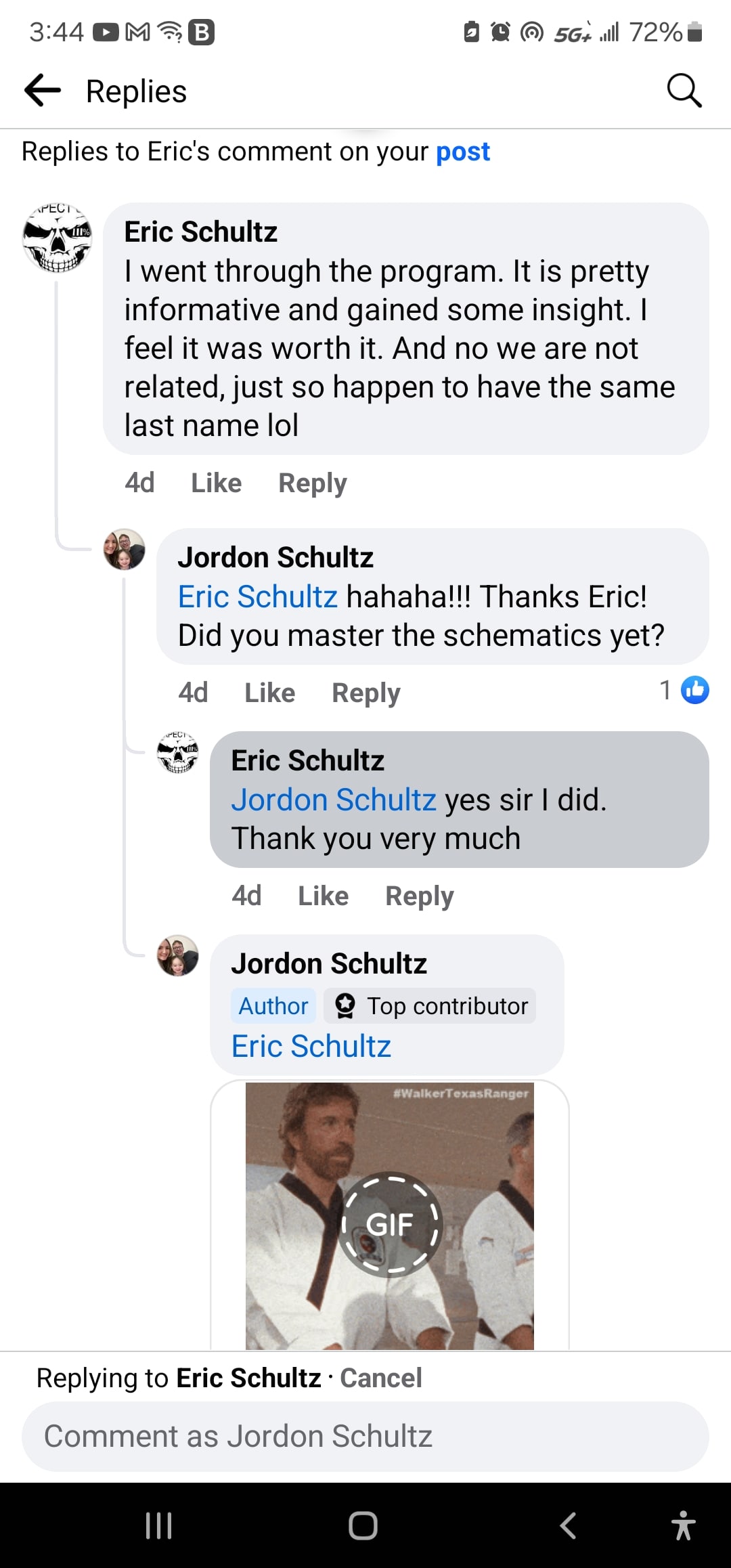
"If I could do it, anybody could do it."
"I didn't even know where to start with an electrical problem." - Dusty Alsbrooks


You get instant access inside our Skool community — course is unlocked immediately.
No.
This is just the schematics module — pulled from the full system so you can start with the most important foundational skill first.
Yes.
This is designed for techs who feel stuck or unsure when opening prints — not engineers or advanced programmers.
No.
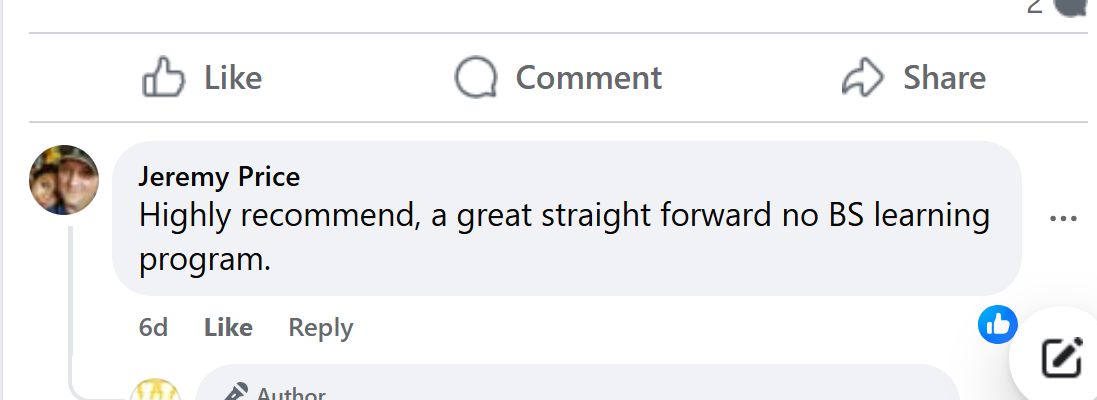
This is a structured, step-by-step walkthrough that shows you where to start and what to follow — something random videos don’t teach.
Start with the one skill strong troubleshooters rely on first.
Join 300+ technicians who’ve went from part-swappers to problem solvers.